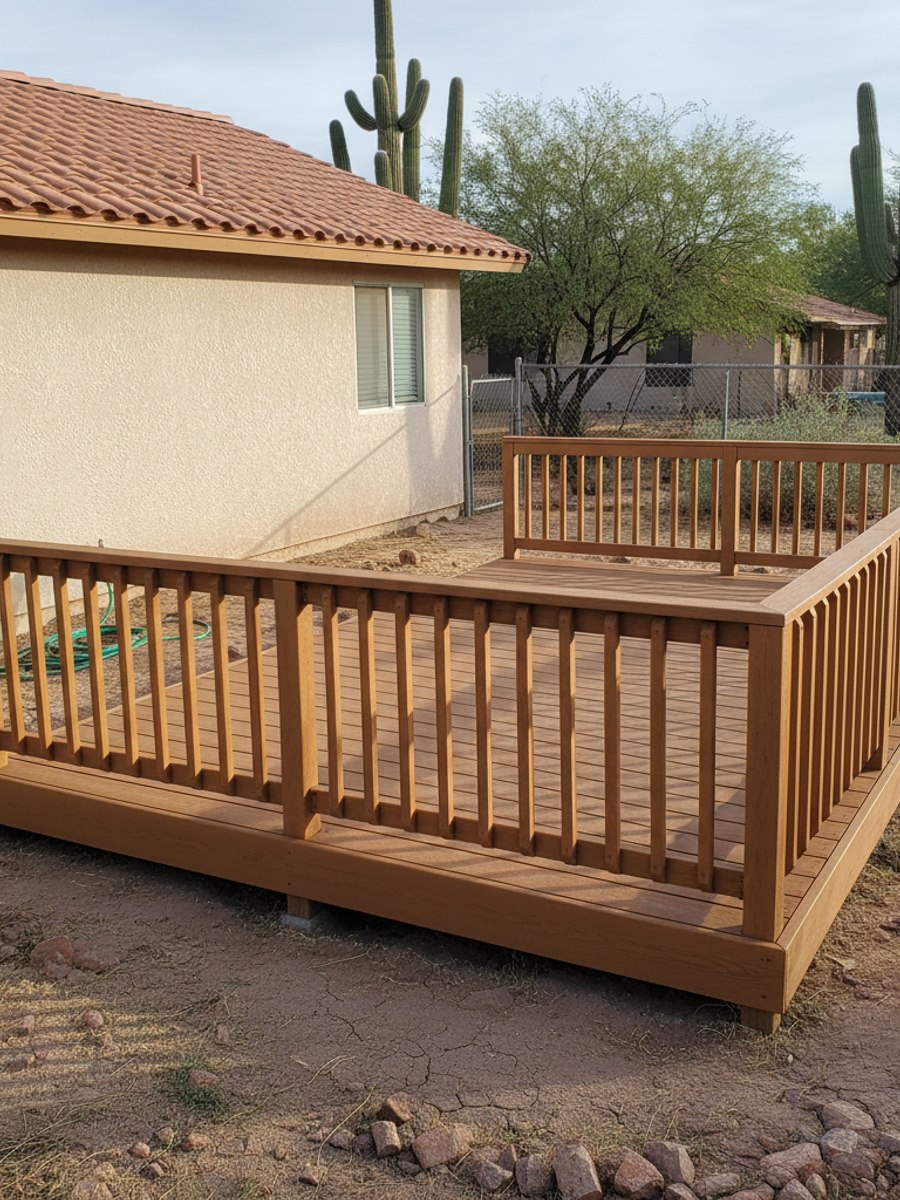
Anybody with a truck and a nail gun can call themselves a deck builder. In Phoenix, the ground and the sun will find the ones who don't actually know the trade, usually within two or three summers. Here's what separates a builder worth hiring from one you'll be calling back to fix in 2027.
Start with the license, not the pitch
Arizona requires a Registrar of Contractors license for any deck job over a small dollar threshold, and a legitimate builder will give you the ROC number without you asking twice. Look it up yourself on the ROC website. Check for complaints, not just whether the license exists. A bond and general liability insurance matter too, because if a footing fails or a railing gives way and somebody gets hurt, you don't want that landing on your homeowner's policy.
If a contractor tells you permits are "optional" for a deck attached to your house, walk away. That's not a shortcut, that's a red flag on the whole operation.
Permits and inspections in the Valley
Most residential deck work in Phoenix goes through the city's Planning and Development Department, and the surrounding towns (Tempe, Chandler, Mesa, Gilbert, Scottsdale) each run their own but similar process. A deck attached to the house with a ledger board almost always needs a structural permit. That means a footing inspection before concrete gets poured, and a framing inspection before decking boards go down. Skip the inspection and you've got a deck that's not covered if something goes wrong, and one that can complicate selling the house later.
If you're in an HOA neighborhood, add another step. A lot of the newer subdivisions in Ahwatukee, Anthem, Queen Creek, and Buckeye require architectural committee approval before the city permit even gets pulled. A builder who's worked those neighborhoods before will know that and build the timeline around it. One who's never dealt with it will be surprised, and surprises cost you weeks.
What the ground here actually does
Phoenix soil is not simple dirt. A lot of lots sit on caliche, a hardpan layer of calcium carbonate that can start anywhere from six inches to two feet down and is nearly as hard as concrete. Digging a proper footing through it takes a breaker bar, a jackhammer, or an auger with a carbide bit, not a post-hole digger from the hardware store. A builder who tells you footings will be "quick, maybe an hour" either hasn't hit caliche yet or isn't planning to dig deep enough.
Footings for an attached deck typically need to go 18 to 24 inches down and be sized to the load, usually a minimum 12-inch diameter sonotube for standard residential spans. Some parts of the Valley also have expansive clay pockets that swell when they get wet and shrink when they dry out, which can crack a shallow footing over a few seasons. Ask specifically how deep they're planning to go and why. A vague answer is a bad sign.
Materials that survive Phoenix heat, not just look good in a showroom
We get over 300 days of direct sun a year here, and pavement temperatures in June and July regularly hit 150 degrees. That matters for decking.
- Untreated or lower-grade wood decking will gray, crack, and splinter fast under this UV load. It needs sealing roughly every 12 to 18 months, not the 3 to 5 years that works in milder climates.
- Composite decking handles the sun better but not all composite is equal. Cheaper capped composite can still get hot enough to burn bare feet by early afternoon in summer, and lighter colors help more than people expect.
- Metal fasteners and hardware should be stainless or coated for corrosion resistance, because monsoon humidity from July through September is enough to rust standard hardware over a few years even in a dry climate the rest of the year.
A good builder will talk you through these tradeoffs unprompted. If they only push one product without asking what you actually want out of it, in terms of price versus how it holds up, that's worth noticing.
Reading the contract and the timeline
A real quote breaks out material cost, labor, permit fees, and demolition or haul-off separately. If it's one lump number with no breakdown, ask why. Get the payment schedule in writing, and be wary of anyone asking for more than a third up front before any material has been ordered.
Ask how long the job will actually take. A straightforward 300 to 400 square foot wood deck, once the permit's approved, usually runs one to two weeks of on-site work. Concrete footings need to cure before you can frame on top of them, typically at least a couple of days depending on the mix and the heat, faster curing in summer but also faster water loss if it's not kept damp, which can weaken the pour if it's rushed. If a contractor promises a full deck build in three days including permitting, either they're skipping the cure time or skipping the permit.
Older neighborhoods versus newer subdivisions
A deck job in Arcadia or Encanto, where houses date to the 1940s through 60s, often means dealing with older additions, buried irrigation lines, or electrical conduit that was never marked on any plan. A builder working there should call Arizona 811 to get lines marked before digging, no exceptions. Newer subdivisions out in Buckeye or Queen Creek tend to have cleaner lots and more predictable soil, but stricter HOA rules on deck height, railing style, and even stain color.
Ask a prospective builder if they've worked in your specific neighborhood before. A specific answer about setbacks, soil, or HOA quirks tells you more than any sales brochure will.
If you want a builder who'll walk your yard, tell you honestly what the soil and sun are going to do to different materials, and pull the right permits before anything gets dug, that's the whole job description of Midway Deck Solutions.